
Design Objects - Table lamp Tolomeo (1986)

When Michele De Lucchi and Giancarlo Fassina presented the prototype of the table lamp Tolomeo to the technical department in Artemide, with it's provocative and showy style, it was abandoned in favor of an approach that explored concepts of tension and movement.
Design Objects - Lighting Taraxacum ’88 (1988)

Although it has the same name as lighting from 1960, the Taraxacum ’88 has an entirely new design.
Design Objects - Chandelier PH Artichoke (1958)

The chandelier PH Artichoke by Poul Henningsen, with its waterfall of peaked copper lampshades, is one of the most singular lamps designed in the Twentieth Century. It is one of the most remarkable lighting models firmed by Henningsen, produced by the Dutch company Louis Poulsen Lighting of Copenaghen.
Design Objects - Folding Chair Tripolina (about 1855)
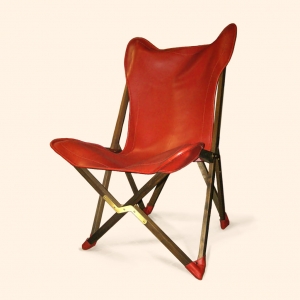
An absolute icon among folding chairs, Tripolina was designed by Joseph Beverly Fenby in Great Britain around 1855 for the officers employed in the British army, a model that he patented latter in 1877. It has a practical and straightforward aspect that offers a modern look and rare among sittings from the Nineteenth Century, which is intended to be the most privileged classes.
Design Objects - Model Chester (1912)

The armchair and sofa model Chester was inspired by English clubs and countryside houses from the Edwardian era.
Design Objects - The Chair Wassily (1925)

The chair Wassily is the most representative and appreciative design of Marcel Breuer. When you are sitting on it, you get wrapped and suspended on its tubular structure made of steel. It is the modern representation of a club chair.
Design Objects - Ladder Back Chair for the Hill House (1902)
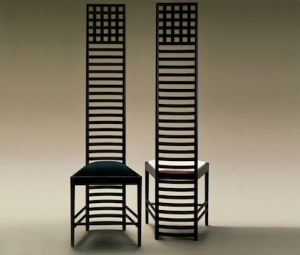
Charles Rennie Mackintosh is one of the English protagonists in the design of the Twenties Century. After graduating from the School of Arts in Glasgow, he was commissioned by the editor Walter Blackie to design his Hill House at Helensburgh in Scotland.
Verba volant, scripta manent
It is an old Latin expression, which means: “words fly, writings remain.” It is used when a need to express prudency on writing down one's thought because if words fly, it can be forgotten or otherwise can be mistakenly remembered by others, while what is written remains that way and cannot be neglected. A similar meaning to another Latin expression “carta canta”. It has its origins from the Roman senate Caius Titus. At that time, it had almost the opposite significance, because most people were analphabets, didn’t know how to write or read, so most messages were spreading by words (“words fly”), not written down. However, if most people had been able to read, these words would have remained an inert and unnecessary message.
Veni, vidi, vici
From the Latin, it means “I came, I saw, I won”. These words are used to express a situation where obtained a quick victory, an incontestable, and effortless success. The history says these were the words of Giulio Cesare (100-44 B. C.) to comment on the lightning victory obtained over Farnace II, the son of the King Ponto Mitridate in 47 B. C. at Zela Ponto. It is what Plutarco wrote in his books, the Greek biographer, who wrote the life of many, including Caesar's. Svetonio, in his work “Life of the caesars”, used this sentence as an autobiography of Caesar to describe his victory in the senate.
Si vis pacem para bellum
“If you want peace, prepare war.” This is the translation from Latin of the saying “Igitur qui desiderat pacem, praeparet bellum”, which means “aiming for peace, preparing for war”. The phrase is taken from the III Book “Epitoma rei militaris” of Publio Flavio Vegezio Renato, a Latin writer who lived at the end of the IV century and the first half of the V century A.D. The four books of this treaty expose the Roman military culture. Substantially the author was trying to revive the greatness of the Roman army, lost in the latest times. Among the advice revealed, this one is mostly used to justify the existence of the military institutions and the escalation of weaponry.